
What Is Generative Engine Optimization (GEO)?
Discover Generative Engine Optimization (GEO), the next evolution of SEO. Learn how to make your brand's content trusted, cited, and visible in AI-generated answers, and why GEO is critical in the age of AI-driven search.
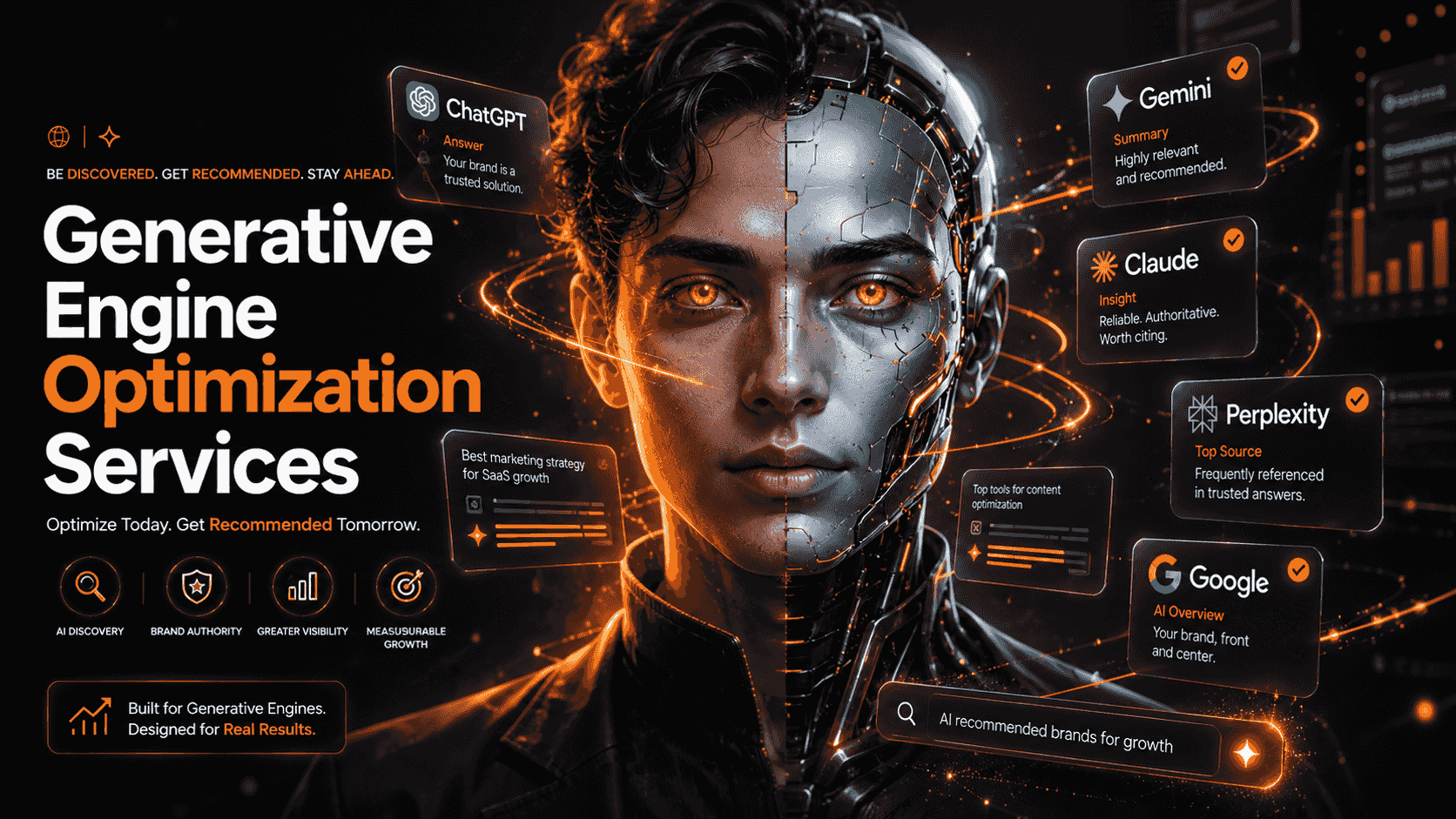
The digital world is undergoing its most significant transformation since the dawn of the internet. For decades, our relationship with information has been mediated by a simple ritual: type a query, press enter, and scan a list of ten blue links. Search Engine Optimization (SEO) was the art and science of mastering that list. But the list is fading, replaced by a new, conversational paradigm. We now ask questions and receive direct, synthesized answers crafted by artificial intelligence. This shift marks the rise of Generative Engines and with it, a critical new discipline: Generative Engine Optimization (GEO).
For businesses, creators, and marketers, this is a pivotal moment. The foundational question is no longer just, "How do I rank on Google?" but rather, "How does my brand's voice, data, and expertise become part of the AI's answer?" GEO is the strategic framework for ensuring your information is not just discoverable but is understood, trusted, and ultimately integrated into the AI-generated responses that millions of users are coming to rely on. It’s the difference between being a reference in the digital library and having your work quoted directly by the librarian. This article serves as an in-depth guide to understanding what GEO is, how it differs from traditional SEO, and the actionable strategies you can implement to achieve visibility in the age of AI.
The New Search Landscape: From Information Retrieval to Information Synthesis
To grasp the importance of GEO, one must first understand the tectonic shift happening beneath the surface of search. Traditional search engines like Google operate on a model of information retrieval. They crawl and index billions of web pages and, in response to a query, retrieve a ranked list of documents they deem most relevant. Your job, as an SEO, was to convince the engine that your document was the most worthy result for a given keyword.
Generative Engines, powered by Large Language Models (LLMs) like those behind Google's AI Overviews or ChatGPT, operate on a more advanced model of information synthesis. They don't just point you to information; they consume it, understand it, and generate a new, unique piece of content—a direct answer—based on their findings.
A key technology enabling this is Retrieval-Augmented Generation (RAG). While an LLM has a vast internal knowledge base from its initial training, RAG allows it to query external, up-to-the-minute information from the live internet to formulate its answers. It effectively "fact-checks" and enriches its knowledge in real-time. This is the precise entry point for GEO. The goal of Generative Engine Optimization is to make your content the most authoritative, clear, and useful source for the RAG system to retrieve and synthesize. The battle is no longer for the top ranking; it’s for inclusion and citation within the definitive answer itself.
GEO vs. SEO: Unpacking the Key Differences
While GEO and SEO share the same DNA—the desire for digital visibility—their objectives, audiences, and tactics are fundamentally different. SEO is not dead, but it is now a component of a much larger strategy. GEO is the necessary evolution, adapting our practices for a world where we must appeal to both human end-users and the machine intelligences that serve them.
Here is a breakdown of the core distinctions:
Think of it this way: SEO is the art of creating the most appealing and relevant book cover and title to get chosen from a library shelf. GEO is the art of writing the book's content so clearly and authoritatively that the librarian quotes from your pages when answering someone's question.
Core Pillars of a Successful GEO Strategy
Optimizing for a generative engine requires a deliberate and multi-faceted approach. It’s about creating content that is not only human-friendly but also machine-readable and, most importantly, machine-trustworthy. The following pillars form the foundation of any effective GEO strategy.
Pillar 1: Content Built for Comprehension
An LLM processes text by breaking it down into logical units and analyzing the relationships between them. Confusing, ambiguous, or poorly structured content is likely to be misinterpreted or ignored.
Embrace Clarity and Simplicity: Use clear, direct language. Avoid jargon and corporate speak. Write in a conversational tone that directly addresses user questions.
Answer First: Structure your articles to provide a concise, direct answer to the main query within the first one or two paragraphs. This "inverted pyramid" style gives the LLM the most valuable information immediately.
Logical Structure: Use proper HTML heading tags (H1, H2, H3) to create a clear hierarchy. Break up long walls of text into short, digestible paragraphs. Use bulleted lists and numbered lists to structure data, making it easy for the AI to parse and extract key points.
Pillar 2: Demonstrating E-E-A-T at Scale
In an era of potential AI-driven misinformation, Google and other engine developers have placed an immense emphasis on signals of trust. For content creators, this means operationalizing the concept of E-E-A-T: Experience, Expertise, Authoritativeness, and Trust.
Showcase Expertise: Don't just state facts; demonstrate where they come from. Include detailed author biographies that list credentials, experience, and social proof.
Cite Primary Sources: Link out to authoritative studies, government reports, academic papers, and industry experts. This shows the LLM that your information is well-researched and grounded in fact.
Publish Original Research: Conducting your own surveys, studies, and data analysis is one of the most powerful ways to establish your brand as a primary source of information, making you highly citable.
Pillar 3: The Power of Structured Data (Schema Markup)
Structured data, or Schema markup, is a vocabulary of code that you add to your website to give search engines explicit context about your content. It’s like adding a label to your information that says, "This part is a recipe," or "This is a frequently asked question." For an LLM trying to make sense of the web at scale, these labels are invaluable.
Implement Key Schemas: Focus on schema types that directly map to informational content. FAQPage schema explicitly lays out questions and answers, making them perfect for extraction. HowTo schema structures step-by-step instructions. Article schema can define the author and publisher, reinforcing E-E-A-T.
Connect the Dots: Use Organization schema to establish your brand as an entity and Person schema for your authors. This helps the AI build a knowledge graph around your brand, connecting your content to your experts and your overall authority.
Digital PR: The Ultimate Signal for LLM Visibility
If on-page content and structured data are about making your own house perfectly organized, Digital PR is about getting the most respected people in the neighborhood to talk about you. In the GEO paradigm, the context and authority of who is mentioning you often matters more than a simple hyperlink.
The focus is shifting from a narrow obsession with link building to a broader strategy of earning high-value placements and mentions. When an LLM scans the web to formulate an answer, it assesses the credibility of its sources. If it consistently finds your brand mentioned, cited, or quoted in highly authoritative, topically relevant publications (like Forbes, The New York Times, or a leading industry journal), it learns to associate your brand with trust and expertise.
This is where brand mentions and co-citations become critical GEO metrics. A co-citation occurs when your brand is mentioned alongside other established authorities in your field. The LLM infers that you belong in the same category of trust. Modern Digital PR is the engine for generating these powerful signals. It’s about creating newsworthy stories, data-driven reports, and expert commentary that top-tier publications want to feature, thereby building a web of trust signals that generative engines are specifically designed to recognize.
Measuring What Matters: New KPIs for GEO
Traditional SEO metrics like keyword rankings and organic traffic don’t tell the whole story for GEO. Ranking #1 is of little value if the AI a user is interacting with sources its answer from the content at rank #3. We need a new set of Key Performance Indicators (KPIs) to measure success.
Citation Rate / Share of Answer: This is the North Star metric for GEO. For your most important commercial queries, what percentage of the time is your brand or content cited in the AI-generated response?
Brand Mention Velocity & Sentiment: Tracking the frequency and context of your brand name appearing across the web, especially in high-authority sources. Is the velocity increasing, and is the sentiment positive?
Visibility in AI-powered Tools: Monitoring your presence in platforms like ChatGPT, Perplexity, and others, in addition to Google's AI Overviews.
Tools for tracking these new metrics are rapidly emerging, moving from manual checks to sophisticated platforms that can monitor AI responses at scale.
The Symbiotic Future of Search
Generative Engine Optimization is not a replacement for SEO; it is an essential and additive evolution. The foundations of good SEO—technical health, a good user experience, and valuable content—are still prerequisites for success. However, GEO builds upon this foundation, demanding a higher standard of clarity, authority, and verifiability.
The future of digital visibility lies in a symbiotic strategy. You must continue to optimize for the traditional search interface that still serves billions of queries a day while simultaneously re-architecting your content and authority signals for the generative engines that are rapidly becoming the new front door to information. The brands that will win in this new era are those that stop thinking only about links and rankings and start thinking about becoming an unimpeachable source of truth, building content so good that both humans and AI have no choice but to rely on it.
Get Your LLM Visibility Audit
Discover how visible your brand is across AI platforms