
How to Track Your Brand in AI-Generated Answers
Learn how to track and influence your brand’s presence in AI-generated answers across platforms like ChatGPT, Perplexity, and Google AI Overviews.
The Search Landscape is No Longer Flat
For two decades, the rules of the digital road were clear: rank on Google. Brands poured trillions of dollars into search engine optimization (SEO), meticulously crafting content, building backlinks, and optimizing keywords to climb the ten blue links. That world is rapidly dissolving. The flat, predictable landscape of search is being replaced by a dynamic, conversational, and often opaque new reality, powered by generative AI.
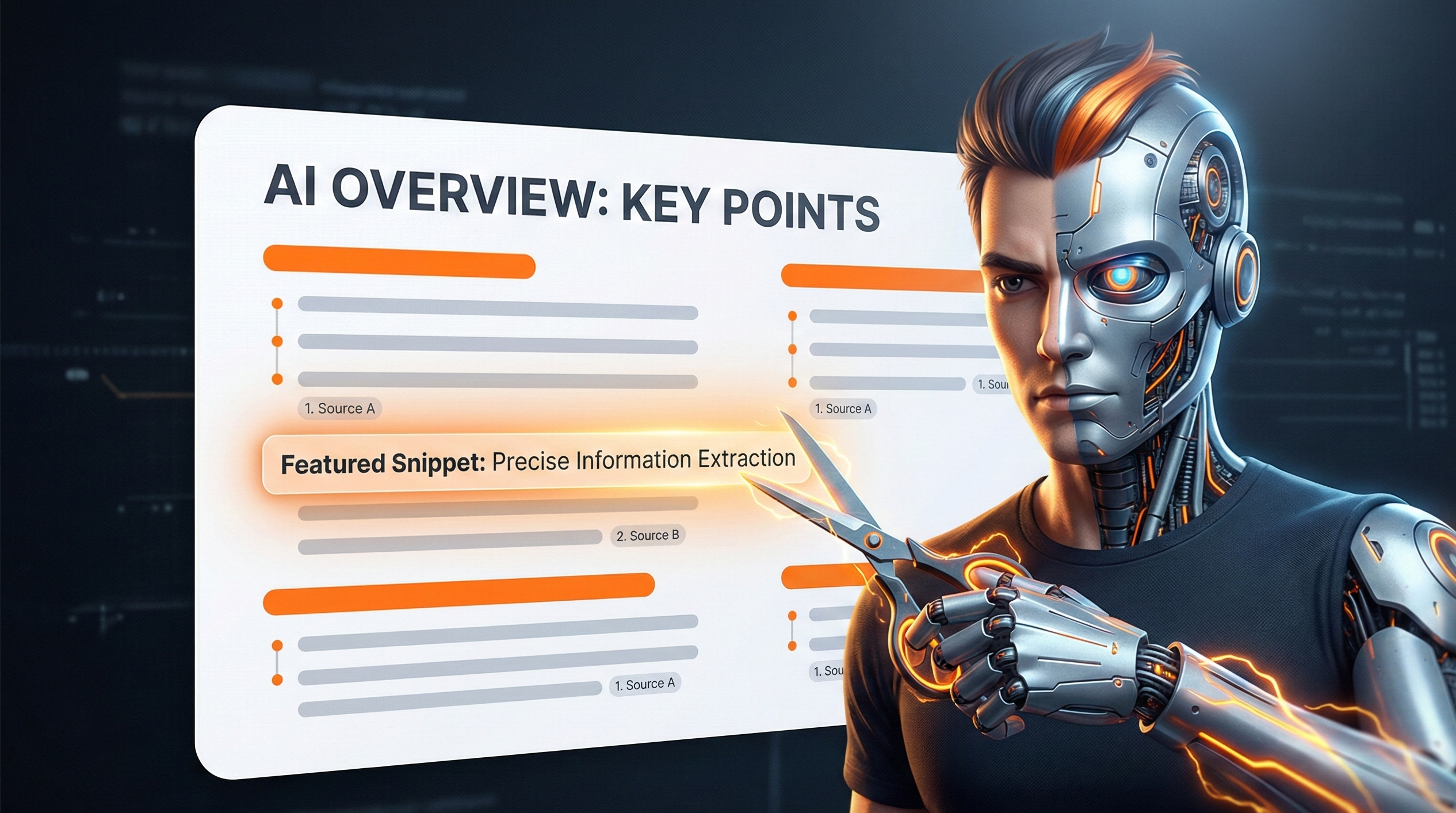
Welcome to the era of the AI-generated answer. When users ask questions to platforms like Google's AI Overviews, Perplexity, or ChatGPT, they no longer receive a list of links to click. Instead, they get a synthesized, definitive-sounding answer, compiled from a vast, unseen universe of data. This fundamental shift presents a monumental challenge for brands. If your customers are getting answers directly from an AI, and that answer doesn't mention you—or worse, mentions a competitor—you've lost a battle you didn't even know you were fighting.
This isn't a distant future; it's happening now. Understanding and adapting to this new paradigm is no longer optional. It's an urgent necessity for brand survival. The key is to move from a reactive to a proactive stance, which begins with a single, critical question: how do you track, and ultimately influence, your brand's presence in these AI-generated answers? This guide will provide a comprehensive framework for navigating this new frontier, from the foundational mechanics of "Answer Engine Optimization" to the evolving role of digital PR and the tools you need to reclaim your brand's visibility.
Why You Can't Afford to Ignore AI Mentions: The Data-Driven Case
The shift to AI-driven search is not just a technological curiosity; it's a seismic event in consumer behavior with profound financial implications. The comfortable certainty of click-through rates and organic traffic is being eroded by a new set of metrics and user habits.
The most immediate impact is the rise of the "zero-click" search. For years, this was a concern as Google featured snippets and knowledge panels. Generative AI puts this trend on steroids. A 2025 study on user behavior in the age of AI search revealed a startling statistic: when a comprehensive AI Overview is present, organic click-through rates (CTR) can plummet by as much as 40%. Users are finding the answers they need directly within the AI's response, negating the need to click through to any website. For brands that have built their entire marketing funnel on attracting organic traffic, this is an existential threat.
Consumer adoption is accelerating this change. The 2025 Consumer Adoption of AI Report indicates that over 60% of consumers now use an AI tool for information gathering at least once a week, a figure that jumps to over 75% for Gen Z. More importantly, trust is growing. The same report found that 55% of users trust the answers provided by AI assistants, a significant increase from previous years. This growing trust means users are less likely to second-guess the AI's output by clicking on source links, further cementing the importance of being mentioned within the AI's answer.
Consider the commercial implications. A user searching for "best project management software for small businesses" is a high-intent, bottom-of-the-funnel lead. In the old model, they would see a list of articles, reviews, and company websites. Now, they might get a paragraph that says:
"For small businesses, top project management tools include Monday.com, known for its user-friendly interface, and Trello for its simple Kanban board system. Asana is also a strong contender, offering robust features for growing teams."
If your brand isn't in that summary, you are invisible. For that user, at that critical moment of decision, you effectively do not exist. This is the new battleground for brand visibility, and the stakes couldn't be higher.
Your Step-by-Step Guide to Tracking Brand Visibility in AI
To influence your presence in AI answers, you first need to measure it. This requires a systematic approach to tracking, moving beyond traditional keyword ranking reports into a more nuanced analysis of brand mentions, sentiment, and share of voice within LLM-generated content.
Phase 1: Foundational Benchmarking
Before you can track progress, you must understand your starting point.
Identify Core Brand and Product Queries: Compile a list of 50-100 search queries that are crucial to your business. This should include:
Brand Name Queries: "Is [Your Brand] good?" "How much does [Your Brand] cost?"
Competitor Comparisons: "[Your Brand] vs. [Competitor A]"
"Best of" Queries: "Best [product category] in [your industry]"
Problem/Solution Queries: "How to solve [customer pain point]?" (where your product is a solution).
Manual Querying and Data Collection: Manually input these queries into the major AI platforms (Google's AI Overviews, ChatGPT, Perplexity, Claude, etc.). For each query, document the following in a spreadsheet:
Platform: Which AI generated the answer?
Mention: Was your brand mentioned? (Yes/No)
Sentiment: Was the mention Positive, Neutral, or Negative?
Context: What was said about your brand? Was it accurate?
Competitor Mentions: Which competitors were mentioned?
Source Links: If the AI provided citations, what were they?
Establish Baseline Metrics: From this initial data set, calculate your baseline:
Share of Voice: For relevant queries, what percentage of AI answers mention your brand compared to competitors?
Sentiment Score: What is the overall sentiment of your brand mentions?
Accuracy Rate: What percentage of mentions are factually correct?
Phase 2: Implementing Automated Tracking Tools
Manual tracking is essential for initial benchmarking but is not scalable. The next step is to leverage emerging tools designed specifically for this purpose. Platforms like Keyword.com, Seer Interactive's AI monitoring suite, and Brand Radar are leading the charge. These tools automate the process of querying AI models at scale and provide dashboards to monitor key metrics over time. When evaluating a tool, look for these key features:
Multi-Platform Tracking: The ability to monitor your brand across various LLMs and generative search engines.
Sentiment Analysis: Automated scoring of the sentiment associated with each brand mention.
Competitor Tracking: The capability to monitor your competitors' visibility alongside your own.
Source Identification: When possible, identifying the likely sources influencing the AI's answer.
Alerts and Reporting: Notifications for new brand mentions or significant changes in sentiment.
Phase 3: Ongoing Analysis and Strategy Refinement
Tracking is not a passive activity. It should directly inform your marketing and content strategy.
Monthly Review: Set a recurring meeting to review your AI visibility dashboard. Look for trends. Is your share of voice increasing? Has sentiment improved?
Identify Gaps and Opportunities: Are there important queries where competitors are consistently mentioned but you are not? This is a content gap. The AI's answer provides a roadmap for the information you need to create.
Address Inaccuracies and Negative Sentiment: If you find the AI is generating false information about your brand (an "AI hallucination"), you need to act. This involves a two-pronged approach: strengthening the factual information about your brand across the web and, where possible, providing feedback directly to the AI platform.
From SEO to AEO: Adopting a New Optimization Mindset
For years, Search Engine Optimization (SEO) has been the dominant discipline. The new paradigm requires an evolution of this thinking into what is being called Answer Engine Optimization (AEO) or Generative Engine Optimization (GEO). While it builds on the foundations of SEO, its focus is fundamentally different.
SEO is primarily concerned with ranking. Its goal is to get your webpage as high as possible on a list of results, with the ultimate success metric being a click.
AEO is concerned with influence and inclusion. Its goal is to have your brand's key messages, data, and value propositions synthesized directly into the AI's generated answer. The ultimate success metric is a favorable mention.
This requires a shift in tactics:
The core principle of AEO is to make it as easy as possible for an AI to understand who you are, what you do, and why you are a credible authority on a topic. This means creating content that is less like a persuasive essay and more like a factual encyclopedia entry—clear, verifiable, and straight to the point.
The New Role of Digital PR: Beyond the Backlink
In the world of AEO, the role of digital PR and link building undergoes a profound transformation. While backlinks remain a signal of authority, their direct influence is waning in favor of a more nuanced metric: contextual brand mentions.
An LLM's understanding of the world is built by reading and synthesizing trillions of data points from across the web. It learns who the authoritative players are in a given industry not just by counting links, but by observing which brands are consistently mentioned in relevant, high-quality content.
Read: What Are Large Language Models (LLMs) and Why Marketers Should Care?
This means a digital PR strategy focused on AEO must prioritize the following:
Mentions over Links: The goal of a media outreach campaign should shift. While a link is still valuable, an unlinked mention in a highly respected industry publication like Forbes, TechCrunch, or a major trade journal can be just as, if not more, impactful for influencing an LLM. The AI doesn't "click" the link; it reads the text and registers that an authoritative source is discussing your brand in a specific context.
Building Topical Authority: Instead of pursuing a scattergun approach to guest posting, focus on dominating the conversation in your specific niche. Your PR efforts should aim to get your brand, your executives, and your data cited in the most important articles, podcasts, and research reports related to your core topics. This creates a dense network of associations that signals to the AI that you are a definitive source of truth for that subject.
Leveraging Knowledge Bases: A significant portion of AI-generated answers, particularly for factual queries, is pulled from structured knowledge bases like Wikipedia and Wikidata. A robust digital PR strategy should include ensuring your brand has accurate, comprehensive, and well-sourced entries in these foundational data sources.
In essence, digital PR becomes the primary engine for feeding the AI the raw materials it needs to form a positive and accurate understanding of your brand. Every piece of high-quality press coverage is another data point reinforcing your brand's expertise, authoritativeness, and trustworthiness (E-E-A-T)—the very signals AI models are being trained to prioritize.
Navigating the Challenges: Hallucinations and the Attribution Void
The world of AI-generated answers is not without its significant risks and challenges. Two of the most pressing concerns for brands are AI "hallucinations" and the lack of clear source attribution.
AI Hallucinations: When the Machine Gets it Wrong
An AI hallucination occurs when an LLM generates information that is factually incorrect, nonsensical, or entirely fabricated, yet presents it with complete confidence. These are not random glitches; they are byproducts of how the technology works, as the model is designed to predict the next most probable word, not to verify facts.
For brands, the consequences can be severe. Imagine an AI confidently stating that your product has a major security flaw that doesn't exist, or that your CEO was involved in a scandal. A real-world example saw an AI-powered travel itinerary recommend a food bank as a top tourist attraction. For a business, a hallucination could be as simple as listing an incorrect price or as damaging as inventing a product recall.
Mitigation Strategy:
Monitor Vigorously: The tracking systems outlined earlier are your first line of defense. You cannot fix a problem you don't know exists.
Flood the Zone with Facts: The best defense against misinformation is an overwhelming offense of accurate information. Ensure your website, Wikipedia page, and owned content are crystal clear, factual, and consistent. The more high-authority, factual data points the AI can find about you, the less likely it is to invent its own.
Use Feedback Mechanisms: Most AI platforms have a "thumbs up/down" or feedback mechanism. Use it. While not a guaranteed fix, providing direct feedback on inaccurate answers helps train the model over time.
The Attribution Void
A related challenge is the "attribution problem." Many AI answers are presented as a definitive block of text with few, if any, direct links to the source material. A Columbia Journalism Review study that analyzed eight AI search engines found that citation practices were universally poor.
This creates two issues for brands:
Lack of Credit: Your original research, data, and content can be scraped, synthesized, and presented by the AI without giving you any credit or referral traffic.
Difficulty in Correction: When an AI gets something wrong about your brand, the lack of clear sourcing makes it incredibly difficult to trace the origin of the misinformation and correct it at the source.
Navigating this void requires a long-term strategy focused on becoming such an undeniable authority in your space that the AI is compelled to mention you by name, not just use your data.
Conclusion: The Future of Brand Management is Now
The rise of generative AI is the most significant disruption to the digital marketing landscape since the advent of the search engine itself. The shift from a list of links to a single, synthesized answer fundamentally changes how consumers discover and engage with brands. Clinging to the old rules of SEO is a strategy for obsolescence.
The future of brand management requires a new, proactive approach centered on Answer Engine Optimization. It demands that we meticulously track our visibility within AI responses, adapt our content to be easily understood by machines, and re-imagine the role of digital PR as a tool for building topical authority and influencing the LLM's knowledge base.
This transition will not be easy. It involves navigating new technologies, unpredictable challenges like hallucinations, and a fundamental change in mindset. But the brands that successfully make this pivot will gain a powerful competitive advantage. They will be the ones mentioned in the moment of decision, their names synonymous with the solutions customers are seeking. The time to start building that future is not next quarter or next year. It is now.
Get Your LLM Visibility Audit
Discover how visible your brand is across AI platforms