
AI SEO Agents: What They Are and What They Can Actually Do
A first-hand guide to where autonomous SEO workflows work, where they fail and the controls required before agents touch production.
AI SEO agents are autonomous or semi-autonomous systems that plan and execute search tasks such as audits, technical fixes, internal linking, content operations and monitoring with limited supervision. They are most reliable on bounded, reversible work with explicit acceptance tests. They are least reliable when strategy, brand judgment or uncertain evidence determines the correct action.
The Agent Landscape in 2026
Autopilot SEO Platforms
Platforms such as Search Atlas OTTO package agent behaviour behind a product interface. They can identify and, with permission, deploy on-page, technical, content or local-search changes. The benefit is a repeatable workflow. The risk is granting broad production power without understanding the rules, data or rollback process.
Coding-Agent Workflows
Claude Code, Codex and similar coding agents operate directly in a repository. With the right instructions they can inspect routes, trace content models, generate structured files, run link checks and validate builds. They are powerful because they see implementation context; they are risky for the same reason. Repository access must be matched by version control, scoped commands and review.
Custom Agent Stacks
Advanced teams connect a planner, search or crawl data, content inventory, issue tracker and publishing API. Custom stacks can enforce company-specific rules, but they also create maintenance, security and observability responsibilities. “Multi-agent” is not automatically better; orchestration overhead can exceed the task.
What Agents Do Well Today
Repeatable Audits at Scale
An agent can crawl templates, compare metadata, locate broken internal links and classify issues consistently. The task works when the output has a schema and every finding must include a URL, evidence and severity.
Bounded Technical Fixes
Agents can add canonicals, repair link targets, create redirects or insert valid structured data when the desired state is explicit. They should run tests and show a diff. A passing syntax check is not enough when the change affects indexation.
Internal Linking
Given an approved topic map, an agent can find relevant passages, propose descriptive anchors and detect orphan pages. It should not add every possible link. Page intent, prominence and editorial flow still require review.
Monitoring and Change Detection
Agents are well suited to checking sitemap changes, status codes, schema drift, source citations and prompt samples on a schedule. They should alert with evidence rather than silently rewriting the site.
Where Agents Fail
Agents can mistake an observable correlation for a ranking rule, overwrite brand nuance, duplicate an existing intent and confidently repeat stale product facts. They may optimise a local metric while harming the wider system—for example, expanding a page until it cannibalises a stronger article.
The failure is often specification, not intelligence. “Improve our SEO” has no bounded target. A safer task identifies the exact files, desired outcome, constraints, tests, rollback and approval point. Our technical GEO checklist is useful because it turns a broad goal into verifiable checks.
How We Run Agent Workflows First-Hand
At Total Authority, we use coding agents for research inventory, repository inspection, structured content packaging, internal-link validation, image prompt orchestration and production builds. Human gates decide whether the topic belongs in the site, whether evidence supports the claim and whether a change should reach the main branch.
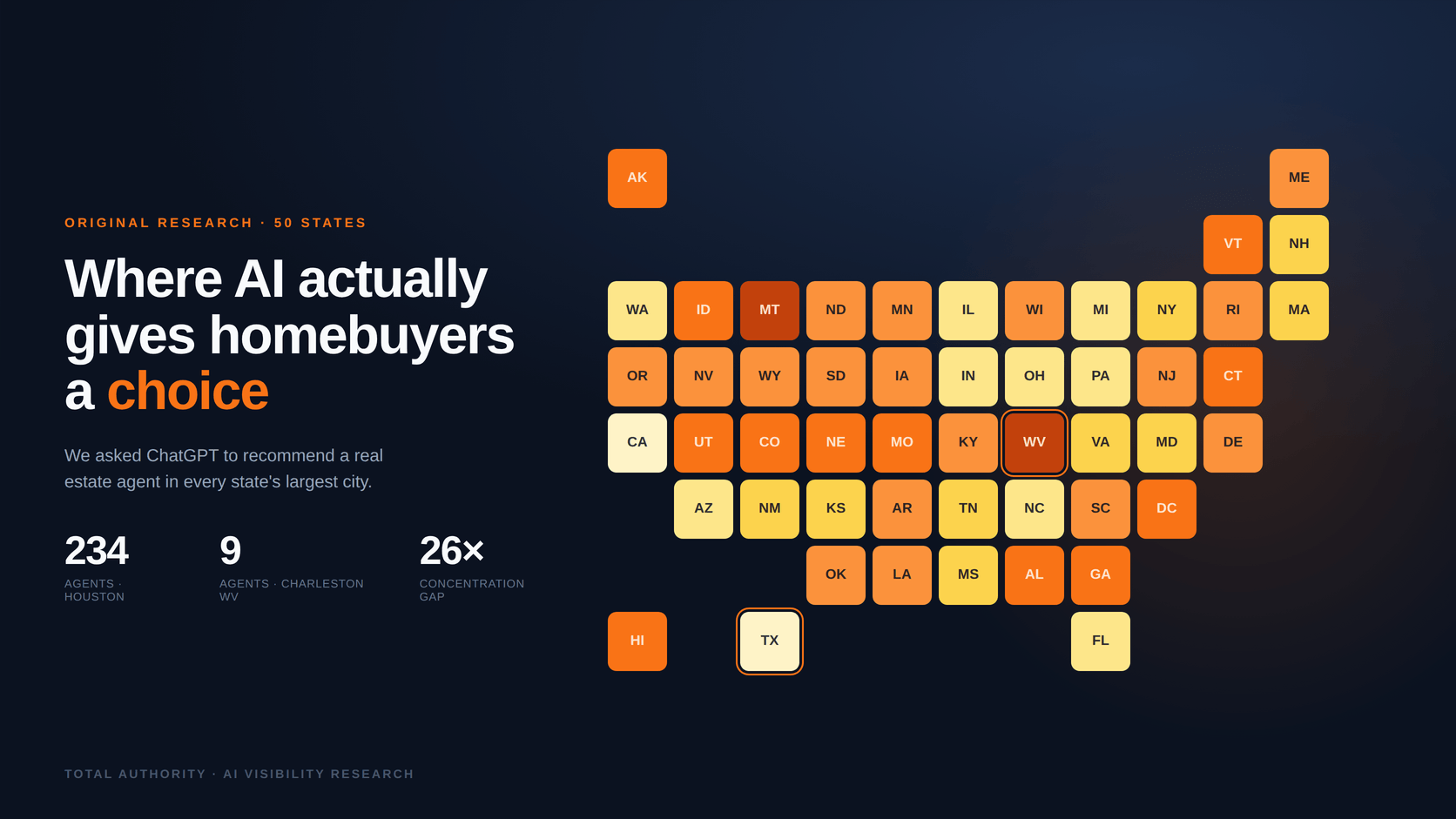
The distinction is visible in these Total Authority builds: one agent surfaces who AI recommends and why; another turns source opportunities into a citation-asset workflow.
The reusable lesson is not the specific tool. It is the workflow: collect evidence, store structured outputs, expose the assumptions, require a reviewer and preserve the before-and-after state.
A Safe Agent Adoption Checklist
- Give the agent a narrow outcome and named files or systems.
- Start with read-only analysis and require evidence for every recommendation.
- Separate planning permission from production-write permission.
- Use a branch, preview or staging environment for every material edit.
- Define automated tests plus a human acceptance test.
- Protect secrets, personal data and third-party credentials.
- Log prompts, tool actions, diffs and failures.
- Require explicit approval for publishing, deletion, redirects and index controls.
For content, add a cannibalization review and fact check. For autonomous technical deployment, add a rollback test. For prompt monitoring, preserve model, date, location and source context.
Choosing an AI SEO Agent
Beginners should choose a constrained product with previews and clear undo controls, not the most autonomous demo. Technical teams can use coding agents when the repository has tests and a disciplined release process. Enterprises need permissioning, audit logs, data controls and vendor risk review before evaluating cleverness.
Compare products within the broader GEO tool stack. If nobody can define or review the work, a tool is not the first fix; establish a human-owned operating process before granting production access.
An Agent Task Specification
A production-safe instruction should include seven fields: objective, allowed files or systems, evidence inputs, constraints, acceptance tests, approval point and rollback. For example: “Find orphaned published guides in the local-post registry; propose up to three contextual links per guide; do not edit headings or URLs; confirm every target resolves; output a patch for review; do not publish.”
That specification creates a verifiable result. By contrast, “improve internal linking” invites an agent to optimise link count without understanding intent or prominence.
Failure Log From Real Workflows
In repository-driven content work, agents commonly fail by using a stale price, selecting an image concept unrelated to the title, losing a required link during conversion, importing a post before its JSON package exists, or treating a successful build as editorial approval. Each failure suggests a guardrail: date and source checks; human art direction; automated link assertions; dependency ordering; and separate technical and editorial gates.
Agents also inherit flaws in the brief. A tool page may request a live-brand mention check while the available infrastructure can only crawl a website. The safe response is to disclose the limitation and measure readiness, not invent a model query behind a confident score.
Operating Metrics for Agent Work
Track accepted changes, rejected changes, reviewer time, rollback rate, defects escaped to production and cost per completed workflow. Raw task volume is a vanity metric. An agent that generates one hundred edits and creates two hours of review debt may be worse than one that proposes ten evidence-backed changes.
Review permissions quarterly and after every incident. Remove unused credentials, keep deployment authority separate from diagnosis where possible and test recovery before expanding autonomy.
Agent Workflow: Technical Audit to Approved Patch
First, the agent reads the repository, sitemap and technical checklist without write access. It returns issues with file paths, URLs and evidence. A human selects the issues that match business priority. Only then does the agent receive permission to create a branch and patch the named files.
The verification stage runs formatting, type checks, tests, link resolution and a production build. The agent presents the diff and unresolved warnings. A reviewer checks indexation impact, visible copy and structured data before merge. Deployment monitoring confirms status codes and rendered output. At no point does the initial diagnosis automatically become a production change.
Agent Workflow: Content Refresh
The agent inventories existing pages, query data, dates, sources and internal links. It proposes which page owns the intent and whether to refresh, merge or leave it alone. A human approves the decision and supplies expert evidence. The agent can then draft bounded changes, verify required links and rebuild the CMS package.
Quality gates include a 40–60 word answer-first opening, primary-source citations, a last-reviewed date for volatile facts, cannibalisation review, author disclosure and schema parity with visible content. The workflow is slower than one-click generation and much safer.
Architecture for Custom SEO Agents
A robust custom system separates roles. The collector retrieves approved data. The analyst produces structured findings. The planner maps findings to allowed actions. The executor has the narrowest permissions. The verifier runs independent tests. The human approves consequential state changes.
Store artefacts between stages instead of relying on conversational memory. A JSON issue record with evidence, severity, proposed fix and status is easier to audit than a long chat. Use deterministic code for validation and reserve model judgment for classification and explanation.
Prompt-Injection and Untrusted Content
Website text, documents and third-party pages are untrusted inputs. A page can contain instructions intended to manipulate an agent. Retrieval systems should strip or quarantine instruction-like text, and the agent should treat page content as data rather than authority over its behaviour. Never expose secrets to a model that is browsing arbitrary content.
The same principle applies to repository files from unknown sources. Tool permissions and system rules must outrank embedded instructions. Log suspicious input and require review rather than allowing it to redefine the task.
Maturity Levels
At level one, the agent analyses and a human implements. At level two, it drafts patches in a branch. At level three, it can open a review after tests pass. At level four, low-risk, reversible changes may deploy automatically under strict policies. Most teams should remain at levels two or three until their acceptance tests, incident response and rollback metrics demonstrate reliability.
Adoption Decision
Automate the task only when inputs, allowed actions and acceptance tests can be stated clearly. If reviewers routinely disagree about the correct outcome, improve the policy before increasing autonomy. The best early agent removes repetitive evidence collection while leaving strategic and production accountability visible.
Autonomy is earned through observed reliability, not granted because a demonstration succeeded once. Expand permissions one reversible workflow at a time.
Stop the expansion when review debt or rollback frequency increases.
Reliability matters more than an impressive autonomy claim.
Keep a human owner accountable for every deployed outcome, including changes proposed and verified by an agent.
Frequently Asked Questions
Can AI agents replace an SEO team?
No. They can replace or accelerate bounded tasks. Strategy, expert evidence, brand accountability, cross-functional prioritisation and high-risk approvals remain human responsibilities.
Are AI agent edits safe for production sites?
Only with scoped access, previews, automated checks, human review, logs and tested rollback. Broad autonomous publishing is not a responsible default.
What is the best AI SEO agent for beginners?
Choose a product that proposes changes, explains evidence and supports undo. Begin with one low-risk workflow rather than sitewide autonomy.
About the Author
Chris Panteli is the founder of Total Authority and Linkifi, host of the Market Movers Pod, and an AI visibility researcher. He documents Total Authority's agent-assisted tool builds and keeps production decisions human-gated.
Start With a Controlled Diagnostic
Grade a priority service page free before automating changes. A good agent needs a specific, evidence-backed problem—not a vague instruction to “do SEO.”