How to Optimize for AI Featured Snippets and Win SERP Visibility
Discover how AI featured snippets impact SEO, visibility, and traffic. Learn optimization tactics, ranking factors, types, and mistakes to avoid.
Introduction
The AI featured snippet—also known as 'position zero'—is the most valuable real estate in search results.
Securing this position on Google’s search engine results pages (SERPs) puts your website in front of thousands of visitors, leading to increased visibility, higher click-through rates, and better credibility.
But showing up in featured snippets requires more than keyword optimization. Marketers must also focus on various ranking factors, such as relevance, content structure, and user intent.
In this guide, we share actionable tips for optimizing your content to boost your SERP visibility in AI-featured snippets.
What Are AI-Featured Snippets?
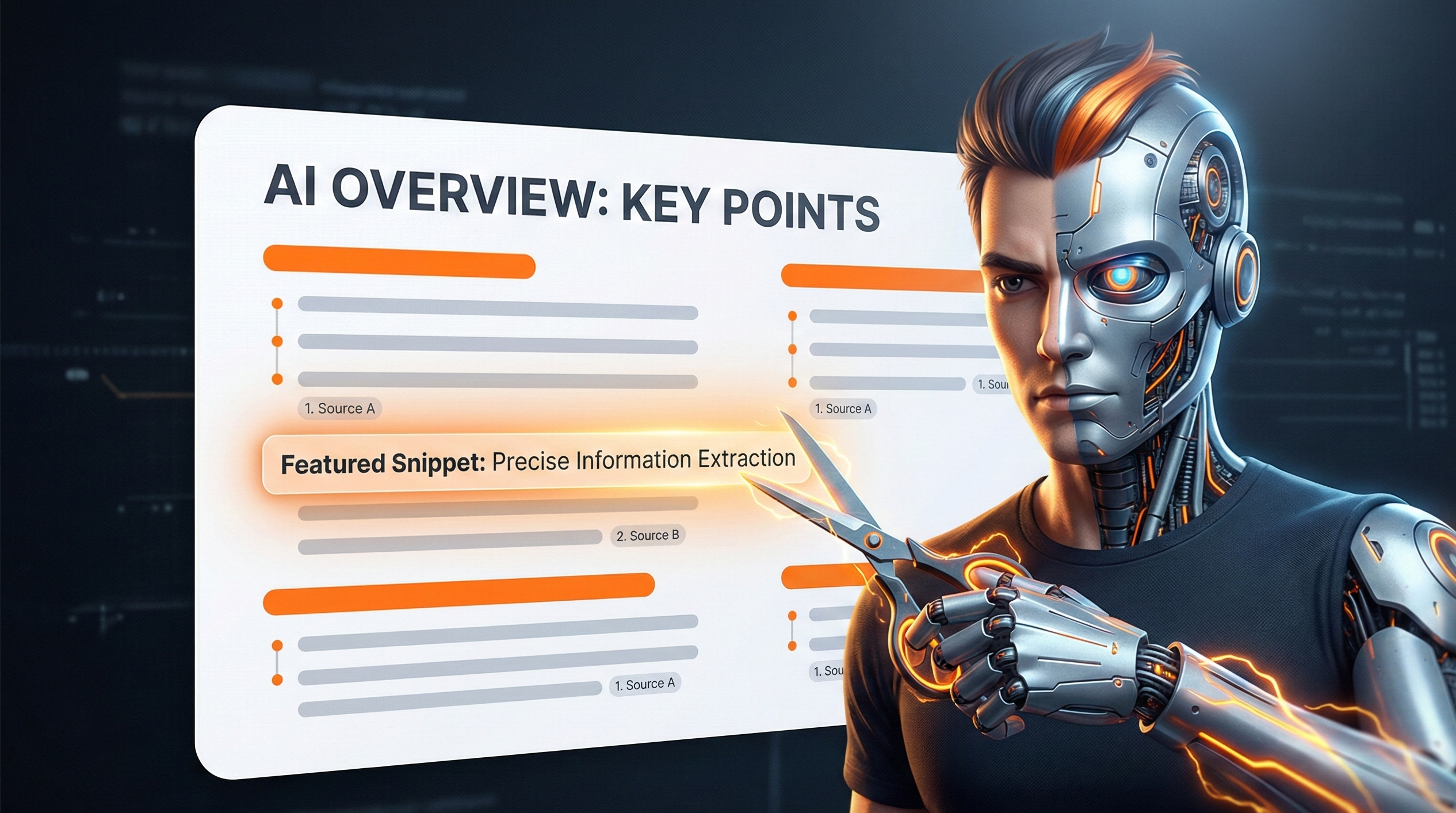
AI-featured snippets are AI-generated summaries at the top of Google’s SERPs that synthesize information from multiple web pages to provide a direct, concise answer.
They offer more information than traditional snippets, along with citations, to address a user’s queries and intent. Apart from quick, concise answers, they also provide lists, bulleted points, and tables for complex queries, improving the user experience.
The goal of AI-featured snippets is to deliver instant answers that satisfy user intent, making information discovery faster compared to traditional search results.
Google AI Overviews vs. AI Featured Snippets
Google AI Overviews (AIO) and AI-featured snippets are essentially the same thing, and the phrases are often used interchangeably.
However, they differ from traditional Google featured snippets, which are extracted from a single website and include only one source link. They’re also not comprehensive, often requiring users to click through the source links for more information.
Google rolled out its AI Overviews (AI-featured snippets) in May 2024, initially in the United States, marking the start of a shift away from traditional featured snippets.
How AI Featured Snippets Are Generated
When a user types a query in Google’s search bar, the search engine uses its advanced large language model (LLM), like Gemini, to:
Analyze the query: The LLM analyzes the phrase to understand the intent and context behind the search, not just keywords.
Find relevant web pages: It then scans the web to find relevant, high-quality pages that address the user’s query.
Synthesize information: Instead of extraction, the LLM consolidates information from multiple pages to provide a clear, informative, and comprehensive answer.
Present information clearly: Upon the synthesis, it presents the response clearly, starting with a direct answer in a short paragraph and using headings, lists, and bullet points to deliver a parseable text.
This process delivers instant answers to user queries, with most responses ranging from 67 to 369 words.
However, AI snippets only appear for about 15 to 25% of keywords, with informational searches accounting for 91% of these queries, as of December 2025.
Types of AI Featured Snippets
AI-generated snippets on Google’s SERPs come in various types, presenting information in clear, engaging formats.
These types include:
Paragraph: This is the most frequent type, usually about 40 to 60 words, to provide a direct answer to what/why/who/where questions.
List: This type displays ranked items, tips, or steps in bulleted or numbered formats, and it’s mostly served for “how-to” queries or best-of lists.
Table: The snippet can also be a table to organize data, pricing, or comparisons into rows and columns for structured information.
Video: You also encounter videos in AI snippets to provide visual guides or tutorials, and Google’s AI mostly pulls videos from YouTube.
The type of snippet served depends on the user's query. For complex queries requiring longer responses, the LLM may combine multiple formats to provide clear, structured answers.
Impact of AI Featured Snippets on SEO
AI-generated snippets represent a shift not just in how Google answers questions, but also in how brands perform in SEO.
Let’s dive into the ways they impact SEO:
Reduced organic clicks: AI snippets provide complete answers at the top, reducing the need to click through to a website for more information. They have reduced clicks by up to 34.5%.
Long-tail keywords are now more important: Optimizing content with long-tail and high-intent keywords is preferred, as these terms are often question-based.
Growing focus on E-E-A-T: With AI search, the focus shifts from keywords to credible, authoritative, and high-quality content. LLMs prioritize these qualities when analyzing pages for answers.
A boost in credibility and authority: Being cited or mentioned in AI snippets can boost your credibility and authority, potentially increasing your branded search volume.
Increased SEO competition: With the focus shifting to E-A-A-T, keywords alone are not enough to stay competitive. Publishing well-structured and high-quality content is now key to getting featured.
SEO has significantly changed since AI search entered the spotlight. Beyond SERP rankings, brands now need visibility in AI-generated answers.
This has created new strategies, such as generative engine optimization (GEO), to complement SEO and increase your chances of being cited in AI-featured snippets.
Core Strategies for AI Featured Snippets Optimization
Brands can optimize their website and content to increase their chances of appearing in AI snippets.
Here are the core strategies:
Answer-first approach: Provide direct, concise answers to questions and headers first before adding an elaborate explanation. This way, Google LLM is likely to pull your content for question-based searches.
AI-friendly content formatting: Ensure every piece of published content is AI-friendly using headings (H1/H2/H3), short paragraphs, lists & tables, and natural language.
Focus on E-A-A-T: Build expertise, experience, authoritativeness, and trustworthiness through in-depth research, data, case studies, examples, and high-quality backlinks.
Schema markup: Implement structured data to make it easy for Google AI to interpret and understand your content. JSON-LD is the recommended format, and you can use schema types like FAQ, HowTo, Article, Product, and Recipe.
Technical SEO: Ensure your pages use clean code, are mobile-friendly, and load fast, as Google prioritizes these UX elements. Use PageSpeed Insights to identify performance issues and fix them.
Implementing these strategies helps you establish your website as a valuable, credible, and authoritative source for LLMs, enabling you to influence AI-generated answers with your content.
Beyond implementing these strategies, you need to measure your current AI visibility to understand where you stand—and where to improve.
And Total Authority offers professional AI visibility audits to make this easy. Our data-backed auditing framework uses measurable benchmarks and proprietary analysis to measure your AI visibility.
After the audit, you receive a comprehensive analysis of your performance, alongside a 4-phase implementation roadmap, an authority content engine plan, and a 90-day quick wins strategy to support your optimization efforts.
Discover more in our strategy blueprint and learn how we empower brands to boost AI visibility.
Limitations of AI Featured Snippets
Despite the growth of AI-featured snippets on SERPs, they come with limitations that can impact your visibility:
Non-static visibility: Being featured in AI-generated snippets is probability-based. You won’t be mentioned or cited for the same queries every time.
The risk of misrepresentation: Based on the training data used and information available online, your brand may be misrepresented in AI snippets, impacting your reputation and narrative.
Traffic loss: While your website can appear in AI snippets, it’s not a guarantee of improved traffic. Users may get the information they need within the snippet and leave.
Bias amplification: Google AI learns from existing web data, so it can easily perpetuate or even amplify brand sentiments and biases present in the data. This can lead to unfair outcomes for your brand.
These limitations underscore the need for an effective narrative strategy, continued human oversight, and regular LLM visibility audits to control your sentiment and representation in AI answers.
Frequently Asked Questions (FAQs)
Here are some common questions that SEOs and marketers ask about AI-featured snippets:
What is the Difference Between AI Featured Snippets and AI Overviews?
AI featured snippets and AI Overviews describe the same feature, and the phrases are often used interchangeably.
However, they differ from traditional featured snippets, which extract information from a single webpage for a simple answer. But AI-featured snippets synthesize information from multiple sources to provide a comprehensive response.
Does Every Website Have a Chance to Appear in AI Featured Snippets?
Yes, any website has a chance, but it depends heavily on creating high-quality, optimized, and well-structured content that Google can pull for concise answers.
To improve your chances, optimize your content for AI, answer questions directly, and deliver value. Also, ensure proper content formatting and structure by using lists, tables, headings (H1/H2/H3), and schema markup.
Does Domain Authority Influence AI Featured Snippet Visibility?
Yes, domain authority influences visibility in AI-featured snippets because Google prioritizes authoritativeness, credibility, and relevance when citing websites.
While domain authority is one of the ranking factors, it’s a strong indicator that other websites find your content valuable and credible. So, Google may likely cite your site in AI-generated snippets.
Do AI Featured Snippets Reduce or Increase Organic Clicks?
AI-featured snippets have been linked to reduced organic clicks, as they offer clear responses to users, especially for informational searches.
The snippets provide instant answers to questions, reducing the need for users to visit sites. Still, the summaries include in-line links to sources, and users can click them for detailed information, boosting a site’s organic clicks and traffic.
Conclusion
Getting mentioned or cited in AI-featured snippets can lead to enhanced visibility, higher CTRs, and increased credibility. But this is not a matter of chance. You must optimize your content and site to increase the chances of being featured in snippets.
Effective LLM optimization starts with auditing your current position in AI answers to get baseline data for future measurements and identify areas for improvement.
At Total Authority, we audit your website and content to gauge your visibility in AI-generated responses. Our data-backed auditing framework uses measurable benchmarks to assess your AI visibility and provide actionable insights, enabling you to adapt to AI systems before your competitors.
Get your AI visibility audit today and discover exactly how to improve your citations in AI-generated snippets.